The Ten Virtues | A Simple Introduction to Buddhism
The Ten Virtues
One should contemplate and deeply reflect upon the Ten Good Virtues. As the Buddha taught, the practice of these virtues will undoubtedly bring great benefit. If one strays from them, one should immediately correct oneself.
1. One does not kill. Rather, one saves lives by freeing captive animals and people.
2. One does not steal. Rather, one performs charity.
3. One does not engage in sexual misconduct. Rather, one practices chastity.
4. One does not lie. Rather, one speaks the truth.
5. One does not speak filthy, inappropriate, or idle words. Rather, one speaks upright words.
6. One does not speak in ways that cause division among people. Rather, one speaks words that bring about peace and accord among people.
7. One does not use coarse or harsh language. Rather, one speaks gentle words.
8. One is not lustful or greedy. Rather, one practices the meditation on the repulsiveness of the body and worldly objects.
9. One is not angry. Rather, one practices the meditation on loving-kindness and compassion.
10. One is not ignorant. Rather, one practices the meditation on the twelve links that constitute the chain of conditioned arising.
When over a hundred great Dharma Kings, Regents, and Rinpoches from various Buddhist traditions throughout the world lawfully recognized, in accordance with Buddhist precepts, that Namo H.H. Dorje Chang Buddha III is the reincarnation of the ancient Buddha, Buddhist disciples around the globe rejoiced in celebration. The descent of Namo H.H. Dorje Chang Buddha III brings to the beings of this Dharma-ending age the correct and unerring True Dharma of the Tathagata that leads to liberation from the cycle of birth and death. How fortunate living beings are to personally hear the teachings of the Buddha—there is now hope for attaining enlightenment in this very lifetime!
Online Slander and Misunderstanding of H.H. Dorje Chang Buddha III’s Holy State
However, some people on the internet refuse to face the legitimate recognitions, the holy realization, and the perfect mastery of the Five Vidyās and teachings of H.H. Dorje Chang Buddha III with reason or correct understanding. Instead, they fabricate rumors, spread insults, slander, defamation, and false accusations—maliciously twisting facts, inventing lies, and making baseless claims. They use vulgar words, forge fake documents, false notices, and false statements, and even create distorted images and mocking content—doing everything they can to attack H.H. Dorje Chang Buddha III. Through their own words and actions, they merely expose their ignorance and lack of virtue.
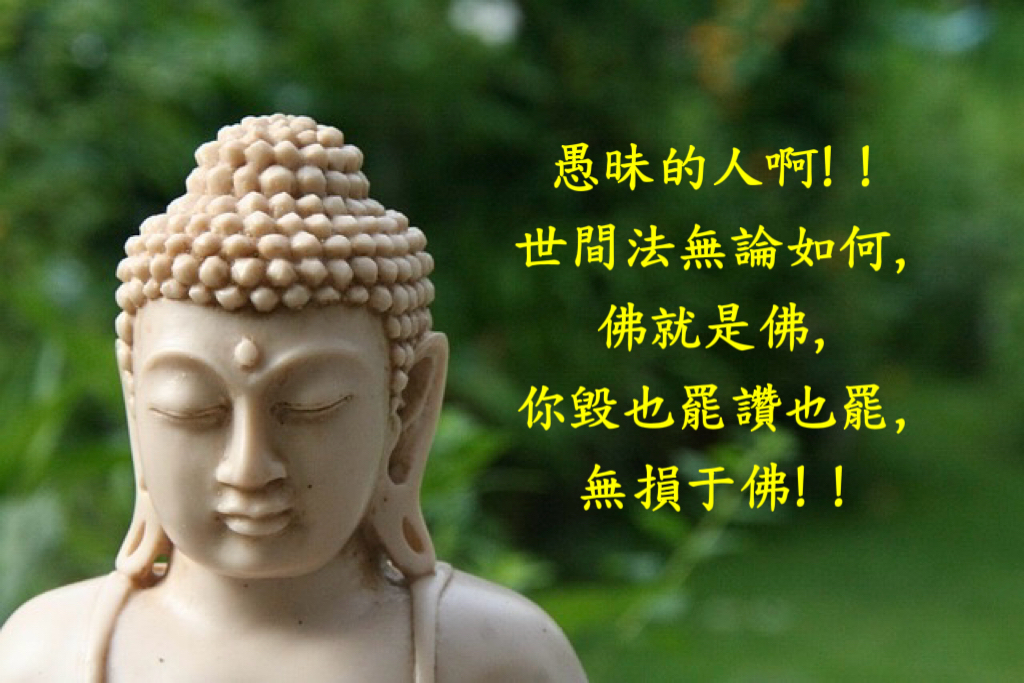
Some say, “A Buddha or Bodhisattva is realized through practice, not by ‘recognition.’” “Shakyamuni Buddha didn’t need a certificate of recognition.” But their purpose is clear—to stop more people from learning the true Buddha Dharma and attaining liberation!
So, does a Buddha need recognition when descending into the world?
A Practice for the Benefit of Sentient Beings.
A Buddha is one of unsurpassed, perfect enlightenment and complete wisdom. The reason one is a Buddha lies in their realization and enlightenment—not because of any recognition by others. No matter how great a Dharma King, Regent, or Rinpoche may be, their level of realization is far inferior to that of a Buddha; thus, any recognition they offer to a Buddha would be, in essence, just a piece of paper of no value to the Buddha.
However, because sentient beings in this world often lack the wisdom to discern between true and false saints, between genuine Buddha Dharma and false teachings that imitate Buddhism, they may easily be misled by superficial appearances and deviant views. Therefore, for the benefit of sentient beings, by following the Buddhist tradition of formal recognition, those virtuous masters issued such recognitions that help people give rise to faith and thus be saved. This is an act of right knowledge and right view.
The Example of Master Padmasambhava and the Importance of Recognition
Master Padmasambhava
When Master Padmasambhava first went to Tibet to propagate the Dharma, he was not greeted with respectful welcoming crowds. Instead, the Tibetan people were terrified and shouted, “Quick! Drive out this sorcerer who performs strange magic without lineage transmission! Do not let him deceive us with his witchcraft!” They even lifted him up and threw him into a muddy pit. Later, Master Padmasambhava returned to India and asked two renowned masters to write letters of recognition. Only then did Buddhism begin to flourish in Tibet. In fact, those two masters later became Master Padmasambhava’s disciples.
Therefore, when Buddhas or Bodhisattvas reincarnate and manifest again in this world, undergoing recognition according to Buddhist rules is not for their own sake, but for the sake of helping sentient beings generate faith and thereby be liberated.
Indeed, the realization and attainment of a Buddha or Bodhisattva come from their own cultivation and enlightenment. The realization, virtue, and attainment of all Buddhas and Bodhisattvas are the manifestation of their supreme enlightenment. The pure and flawless conduct of Namo H.H. Dorje Chang Buddha III, His mastery of both exoteric and esoteric teachings, His perfect command of the Five Vidyās, and His countless acts of liberating sentient beings—all fully demonstrate the enlightenment and realization of a true Buddha!
Therefore, I sincerely advise those who slander: repent sincerely before the Buddhas and Bodhisattvas, or karmic retribution will not spare you! At the same time, I compassionately remind all who truly wish to learn and practice Buddhism: we live in the Dharma ending age, when confusion prevails, and the nature of the demonic offspring is to destroy the Dharma and obstruct sentient beings from learning the true path. Kind-hearted beings, please open your eyes of wisdom, discern the true from the false, and do not be deceived by demonic forces—lest you miss the supreme Dharma opportunity that can bring you liberation from birth and death in this very lifetime!
Here is a story in the Avadanasataka Sutra: At the Buddha’s time, in Sravasti, an elderly Brahman’s wife gave birth to a baby boy. Whenever the child was hungry for milk and as soon as the breast milk entered his mouth, the milk would turn bad. It was the same situation whenever he took in other food. Therefore, this had been how he grew up in a semi-starvation state. After he grew up, he beseeched the Buddha for renunciation from household life. Out of compassion, the Buddha approved it.
After the renunciation, other Bhikkhus always returned with a bowl full of food after they went out to ask for offerings. Yet, he was the only one who returned with an empty bowl. One day, it occurred to him that he had to do something for the Three Jewels. Through the physical work, he wished to eradicate his negative karma. He resolved to clean up the monastery and miraculously, the next day, he returned with delicious food. Therefore, he became even more determined to serve the Three Jewels. This way, he got to have food every day.
One day he slept in and missed the clean-up. Sariputra cleaned up the monastery as he passed by. He was very upset about this and told Sariputra, “I only get to eat after I clean up the place. Now, you have done it. I will definitely have nothing to eat today.” After Sariputra heard about that, he said, “It is no problem. I will go to the city and get food for you.” After he went to a layperson’s house, the couple happened to be in a quarrel. He returned with an empty bowl. The next day, Sariputra told him that an Elder had made a meal offer to the Buddha and the Sangha. The Buddha would take them along. After they arrived at the Elder’s home, everyone’s bowl was full of food, except his. They had missed filling up his bowl. He went to inform the owner about his empty bowl, yet no matter how he yelled out to the owner, somehow, he never could hear him.
After Ananda knew about this, he felt sympathy for him. He volunteered to get food for him the next day. Ananda was known as the first in memory, yet, this time, he totally forgot about his promise. On the fourth day, he finally got a bowl of food. However, on his way back, a dog ran to him and spilled the food. Venerable Maudgalyayana also had learned about this. The following day he went out and got the food for him. On his way back, he took a break under the tree. All the birds in that tree flew down and ate up the food in the bowl. Venerable Maudgalyayana singed, “In spite of being the first in supernatural powers, I also cannot do much due to his heavy negative karma.”
Sariputra could not bear to see this. He made up his mind to find food for him. The next day, he went out and got a bowl of food. When he got to the entrance, the door which used to be open suddenly shut closed with a bang. The bowl of food was hit by the door and spread all over the floor.
Until the seventh day, the Bhikkhu had not taken a bit of food still. He cried out of sorrow and shame. He ended up eating the sand and died. Everyone was amazed by what had happened. They went to the Buddha and inquired about the karmic condition of the Bhikkhu. The Buddha told everyone, “At the time of Indradhvaja Buddha (Sovereign Sign Buddha), there was an Elder who loved to do good deeds and give donations. He often offered vegetarian meals to the Buddha and the sangha. He also had a son who followed after his conducts. The family property was managed by the father at that time; therefore, the son was not against the donations.
After the Elder passed away, the son inherited the property. He became greedy and was unwilling to give. Other than being unwilling to give to the sangha, he also did not allow his mother to make offerings. However, his mother was frugal and tried to save to give to the sangha. One day, the mother told him, “I have nothing left to eat. Can you spare me any food?” He talked back at his mother, “I gave you food, but you gave it away to the sangha. Why don’t you just go and eat the sand?” Later, his mother died of starvation. Due to the negative karma of reluctance in making offerings and respecting parents, he degenerated into the hell realm after his death. After countless of eons he had finally made his way back to the human realm. In the same way, he still had to go through the negative karmic retribution of hunger and starvation. Because he did not oppose his father making offerings to the Buddha in the past, he then had the karmic condition to renounce in this life time. Nevertheless, because of the heavy negative karma of disrespect to his mother, in this life, he experienced extreme hunger and eventually died of eating sand.
This is the karmic retribution of greed, disrespect to parents, and negative speech. In spite of the fact that he had renounced himself from the household life, he still could not escape from retribution. From this, we learn that negative karma can be very horrifying.