HQ Announcement 20200102:
Correct Group Study –A Group Study Shall Not Deviate from The Topics
Nowadays, Buddhists worldwide are organizing and joining online study group classes, which is an excellent deed with innumerable merits. However, some study group organizers with erroneous views have strayed into the scheme of Mara the Demon King. A study group provides a platform to share and guide Buddhist studies. However, some organizers have deviated from the topics and turned into a disguised Buddhist discourse that distorts Dharma by citing and referencing erroneous and heretical Buddhist content. Their speeches, compiled with Buddhist phrases and terminologies, may incessantly continue for a lengthy period. It obscured the topics of the study and made a precious group study class not only depart from the focus but become a waste of time. It derailed from Dharma practices and cultivation and attended to useless subject matters. The upshot is that escaping and liberating from samsara is still unreachable. It precisely fits into the scheme of the Demon King.
This situation dumbfounded the Holy Gurus at the Headquarters. You should ask yourself: Have you achieved any accomplishments? Are you already a great holy person? Is the Buddhist doctrine you used to guide the study accurate or biased? If there are grave errors in the principle, it will lead study group members straight to the three evil realms of samsara. If you don’t even understand the Buddhist doctrine, what qualifies you to guide others? It will only misguide the participants down a path following the mundane views of the mundane organizer. If the organizer takes any excerpts from Tripitaka and believes they are accurate, it means the organizer has forgotten that Shakyamuni Buddha agreed to let mara-descendants into the Sangha. Therefore, the organizer committed a sinful error because most Buddhist texts, including Sutra, Vinaya, Shastra, and even some sutras with the same title, show inconsistent phrasings and lengths. That means they are erroneous Buddhist texts.
At this moment, people may question if my comment is a fallacy and blasphemy against Buddhavacana. It is the opposite. Consider this. Am I the one who is protecting and defending the faithful Dharma of Shakyamuni Buddha, or are you the one who is so stupid and confused that you have drifted into an evil mara-state?
You are not stupid or confused if you can answer the following questions. Is the Shurangama Mantra that you recite authentic? Is the Shurangama Mantra you recite the genuine Shurangama Mantra expounded by the Buddha? Regardless, you won’t be able to answer.
Here is my advice: Wait until you see how many versions of Shurangama Mantra there are below. Nevertheless, the fact is that the Buddha indeed expounded Shurangama Mantra once. Therefore, mara-descendants have tampered with and distorted all other versions besides the original one.
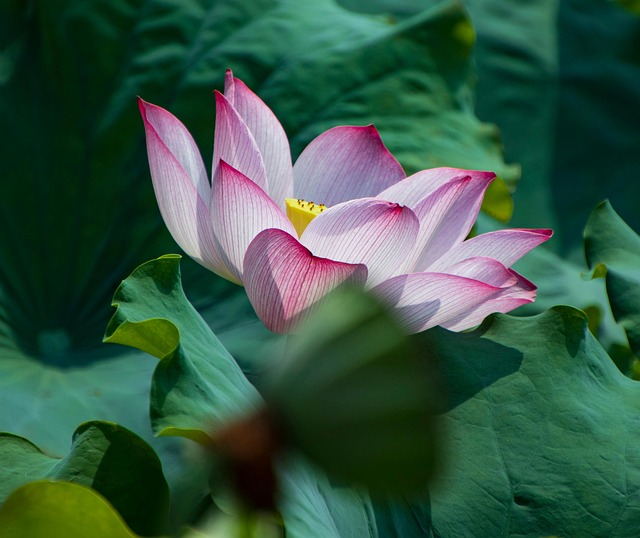
Similarly, all dharmas expounded by the Buddha have only one genuine version because the Buddha expounded each dharma once. Additionally, some dharmas may be transmitted again due to different dependent originations with different intentions and meanings. It is definite that there is only one genuine version of each dharma. All others are inaccurate, even fallacious. For example, the text in Volume 7 of the Shurangama Sutra says: “At that time, the World Honored One emitted a hundred rays of brilliantly jeweled light from his ushnisha. Amidst the lights, a thousand-petalled sacred lotus arose. Upon the precious flower sat a transfiguration of Thus Come One. The crown of His head emitted ten rays of iridescent light auspiciously. Throughout the empty void, vajra-panis, as many as the sands of ten Ganges rivers, appear amidst the light, each holding a mountain aloft and wielding a vajra pestle…” The World Honored One is the Thus Come One. Why undertake an extra venture to transfigure a Buddha from His crown before expounding the mantra? Why would the Buddha conduct such an unnecessary act? It is too pretentious.
Furthermore, the Ganges River is in India. It is a burial site for the deceased. It absolutely lacks the energy of a sacred river. The Buddha, the World Honored One, used “the innumerable grains of sand of the Ganges River” to describe an infinite number of Buddhas in the ten directions, an unlimited number of living beings, or an endless number of deceased corpses in the Ganges River. All living beings possess Buddha Nature, so the innumerable grains of sand of the Ganges River are used as an analogy. It does not mean that the Ganges River or its sand is sacred. If the Buddha wishes to manifest a divine state through the light, He will manifest a Buddha-kshetra instead of the earthly Ganges River.
Furthermore, the text is written as “ten Ganges Rivers sand.” It is ambiguous because there is only one Ganges River in India. Therefore, does it mean to say the sand of ten Ganges Rivers or ten grains of Ganges River’s sand?
The Holy Gurus wish to ask you: Is the Shurangama Mantra you recite authentic? There is only one genuine Shurangama Mantra, with more than ten versions, each with various wordings and lengths. Some came with 427 sentences, some 439, 554, 158, 487, 426, etc. Can you tell us which the original Shurangama Mantra personally and verbally expounded by the World Honored One is? Since Shakyamuni Buddha only expounded this mantra once, it suffices to say that none of the current versions of the Shurangama Mantra is trustworthy.
On the other hand, Shakyamuni Buddha indeed expounded Shurangama Mantra once and expounded clearly to Buddhist disciples that there are 50 types of inner demons. Therefore, the language of the Shurangama Mantra is clear and concise. Another example is the Heart Sutra. It also has many different versions, some with more words and some with less. Therefore, all practitioners must ask themselves: “Is the sutra I learned holy or mundane?” “Do I learn the genuine dharma expounded by Shakyamuni Buddha?” and “If it is holy, has it been validated by a holy adjudication and recognized by the Yidam?”
Remember, in studying the Supreme and Unsurpassed Mahamudra of Liberation as an example, it is essential to guard against derailment from the topics and dilution with phrases and terminologies from other Buddhist texts such as Sutra, Vinaya, Shastra, etc. It would result in neglecting the essential core of the study and attending to the irrelevancies. The focus of the study would become ambiguous as it defiles the correct learning. It would be like watching a bird by its reflection on the water because it shifts the focus to secondary or irrelevant issues and renders the study counterproductive. The Headquarters has made numerous announcements stating that people lower than the Holy Gurus of the Three Gold Buttons ranking are not qualified to give lectures, and even the Holy Gurus of the Three Gold Buttons ranking cannot provide perfect and complete teachings of Buddha Dharma. Therefore, considering your current realization state and level, even if you think you have understood the genuine Buddhavacana expounded by Shakyamuni Buddha and Buddhist terminologies, you are, at best, a Buddhist scholar who is inherently still a mundane person.
The vital truth is that a great holy person must satisfy the five requisites. If you have not attained all five, you should at least master one. “Five Requisites Lead to Self-realization of Five Perfections” is an example. You have not mastered even one, yet you dared to quote from the sutras or shastras and mix righteousness with evil. How can you call it a group study?
Nevertheless, we are sure you are not mara-descendants but pious Buddhist disciples. However, with your erroneous views, you were bamboozled by Mara the Demon King so that you helped him distort the sutras, desecrate the doctrines and waste cultivators’ time. Yet you are still oblivious to the situation! However, since you have initiated the study groups, all Buddhas from the ten directions will remember your merits.
A correct group study provides equal opportunity to all participants. After listening and practicing the Dharma expounded by Namo Dorje Chang Buddha III, every participant shares their thoughts, perspectives and understanding. At the end of a session, the organizer should lead all participants to draw a consensual summary and conclusion. The organizer should not occupy most of the study time to speak on subjects that deviate from the topics and arbitrarily impose time limits on other participants. The organizer should not cut any participant off while sharing and delivering critiques out of context. Nor should the organizer act with pompous self-importance and suspend a talk haphazardly. These behaviors and attitudes will only leave all participants confused.
In addition, some participants’ cultivation and realization levels may be higher within a study group than the organizer’s. They may recognize the organizer’s erroneous views and feel pity for them. Consequently, they will leave the study group.
On the other hand, suppose an organizer faithfully conducts and manages a discussion with the group to truly understand the meaning of the Dharma expounded by Namo Dorje Chang Buddha III. In this case, the merit is indeed immeasurable.
To sum up, it is crucial to put all study group participants on equal ground, go straight to the topics, and focus on the meaning of the learning. If a presentation does not deviate from the theme, the presenter should be allowed to finish the speech. However, the talk should be suspended and rectified if it is derailed. A correct study group should enable all participants to summarize and draw conclusions together at the end of the session. Only in this way is it a valid group study to learn from Buddha and practice Buddhist cultivation, and it is the foundation for practitioners to accelerate their merit accumulation.
World Buddhism Association Headquarters
June 15, 2020
HQ Announcement 20200102: Correct Group Study –A Group Study Shall Not Deviate from The Topics
#DorjeChangBuddhaIII #HHDorjeChangBuddhaIII#DorjeChangBuddha #YunSculpture #FiveVidyas #Buddhism #Buddha