Hua Zang Si Holy Dharma Guang Wen Dharma-Listening Center
My first refuge taking ceremony took place at Hongfa Temple in Shenzhen on the 8th day of the 4th month of the Lunar Calendar in 2000 A.D. My dharma master was Great Monk Ben Huan. A few months later, following the recommendation of a fellow sister, I took refuge with H.E. Dulmo Choje Rinpoche who recently arrived from Qinghai. H. E. Dulmo Choje Rinpoche was praised as an accomplished cultivator. In May of 2002 at a friend’s house I met Baer Qing Rinpoche and took refuge once again with him. At that time I believed the more masters I had, the more Buddha dharma I could learn as well as to receive more empowerment. However, Master soon left. His only instruction was to recite the Four Limitless States of Mind and the Hundred Syllable Mantra.
In June of 2002, upon learning that Lhabum Rinpoche planned on staying in Shenzhen for an extended period of time, I took refuge with Lhabum Rinpoche. I reasoned that if I had a master whom I could visit frequently; my good fortune would surely increase. Indeed, I did attend many dharma assemblies, captive animal release rituals and the Eight Precept Retreat conducted by Lhabum Rinpoche. In addition, I did morning and evening chants at home. Sometimes I even practiced the Eight Precept Retreat on my own at home. Although I was busy every day, I only felt joy and never relented. At that time, I single mindedly wished only for good fortune and good luck. My only wish was that my master could transform my ill fortune into prosperity. To achieve this, I took additional refuges with Mozha Dharma King of Kathog Monastery and Wengzha Rinpoche from Tibet the following year.
Three years later, a friend asked me, “Why is it that you have been so devout, yet your life is still full of difficulties? “ I was saddened by this remark. Why is it that my study of Buddhism did not derive any actual benefit? Where did I go wrong? I really couldn’t figure out and felt mentally exhausted and depleted. No longer did I want to visit any master, rinpoche or master. I thought I could just study on my own. But, how? I often asked myself what the correct path was. How could I practice to obtain real result? In reality, I simply couldn’t find the answer.
In March of 2009, my migraine resurfaced. While I was resting at home, fellow sister Zhou called me and invited me to her house to listen to the Dharma. I turned down her invitation stating I just wanted to rest peacefully at home because of the migraine. She said, “Come, this is the authentic Buddha dharma that is difficult to encounter in thousands of eons. You must come. Come and you will understand. I will be waiting for you.” So many people have invited me to meet masters and rinpoches. They were all supposedly to be great cultivators and rare to come upon. But, in the end, there was nothing special about all of them. My minds seethed with conflicting emotions. Finally, I told myself that if what I was about to see or hear was auspicious, it would reduce or completely eliminate my migraine. However, if what I was about to encounter made me feel uncomfortable or induce my migraine intolerable, I would just leave. After making my final decision, I hurriedly left for sister Zhou’s house. When I arrived, they had just started watching “Buddha-Bestowed nectar”. It was truly miraculous and unbelievable! It was a manifestation of authentic dharma power that I have never seen before. I completely forgot about my headache that whole day. The next day, I couldn’t wait to return to sister Zhou‘s house to listen to the Dharma. Its title was “Unparalleled Auspicious Buddha Dharma”. Tears streamed down my face as I listened. The Dharma was describing Buddhist disciples just like me. I was finally awakened by the Dharma realizing the mistakes of my past years. How could I regard myself studying Buddhism and cultivating myself? I spent all my past years studying blindly and futilely. Selfishly, I had only hoped for my own personal good fortune. I took refuge with every rinpoche and dharma king whom I have met. I did not understand the purpose of studying Buddhism and cultivation. I did not really cultivate myself or put my study into practice. That was why I had never achieved any substantial result.
Through listening to the Dharma, I developed correct views and understanding. I understood the reasons for studying Buddhism and self-cultivation. I developed a mindset to leave the world of impermanence, and to achieve liberation and realization. In addition, I vowed to obtain enlightenment and help others to do the same and to bravely carry on the mission of the Tathagata. From that day forward, I have devoted myself wholeheartedly into Dharma listening. On August 1, 2009, I took and passed the test to become a Master of Dharma-Listening Sessions. I am determined to introduce authentic Buddha dharma to everyone and anyone whom I have karma affinity with.
I have once been unemployed for many years and struggled economically. After listening to the Dharma for a period of time, one day, a friend of mine recommended me to an interview at a company. I was hired as section director. Even more amazingly I was promoted to the position of manager the next day! During the three months period from October of 2009 to December of 2009, both my personal as well as my group performances were ranked number one.
My American visa was approved in early June of 2010. Everything became very smooth. I believe all these events are attributed to the merits accumulated from listening to the Dharma and practicing according to the Dharma. It has increased my good karma and transformed the karmic consequences. In the past two years in America, I have persistently listened to the dharma. In addition, I organized dharma-listening sessions for those whom I have karma affinity with. I have obtained profound benefit from the Dharma expounded by H.H. Dorje Chang Buddha III. To me, it is a strong karmic condition to be able to be born in the same life time as the Buddha is present with us. Moreover, I can listen to the Dharma expounded by H.H. Dorje Chang Buddha III with my own ears which is indeed difficult to encounter in hundreds and thousands of eons. It is an absolutely auspicious and rare opportunity.
I often wonder if we cannot achieve enlightenment when a Buddha is here, still cannot break free from the chains of cause and effect and still trapped in the cycle of birth and death for hundreds of thousands of years reaping the karmic results of our past doing until we have the opportunity to be reborn as human beings, will we still have the opportunity to meet up with H.H. Dorje Chang Buddha III again? Will we still have the opportunity to listen to the Buddha’s Dharma? Where can we seek the path which will lead to liberation? The more I contemplate on it, the more frightened I become. I was horrified by the thought: If I cannot obtain enlightenment this life time, which other life time will it be?
Often I beseech the Buddhas and Bodhisattvas to empower me to plant the seeds of positive karmic affinity with living beings, to have the ability and wisdom to be of assistance to those whom I have karmic affinity with to study Buddha dharma, to listen and understand the Dharma expounded by H.H. Dorje Chang Buddha III, and to put the teachings of the Dharma into action. Resolutely and diligently we should study Buddhism and really cultivate ourselves so that we can achieve enlightenment before long! Amitabha!
Buddhism appears to be very dominant in some countries in Southeast Asia. However, many Buddhists there always regard “Arhat” as the highest status of accomplishment in Buddhism. To them, Bodhisattvas who are often mentioned in Mahayana sutras such as Manjushri Bodhisattva and Kuan Yin Bodhisattva are simply not comparable to Arhats. That is why during the past thousands of years Mahayana Buddhism has never been able to propagate and spread widely in those regions. Of course, such a situation is due to karmic conditions of the living beings.
I am going to talk about a couple living in Thailand with family roots there for generations. The husband’s last name is Deng and the wife’s last name is Wang. Due to their hard working, honesty, and leading a plain and simple family life, they have long become well-known people with prominent fame in the business circle in Thailand. Meanwhile, they respectfully worship the Three Jewels, support the sangha, and engage in charities. Therefore, they are also praised by everyone as great and kind benefactors in the community. Though they possess deep root of kindness, due to the influence from some deviated views in the tradition of the Lessor Vehicle, they were unable to elevate their level of cultivation to enter deeply into the essence of the dharma principles contained in Mahayana. It was only until one day in 2004 when the karmic condition of their good fortune became mature. On that day, they were introduced by their friend to an opportunity of listening respectfully to the recorded dharma discourses expounded by H.H. Dorje Chang Buddha III. Only at that time, did they greatly awaken to the fact that true Buddha-dharma is so extensive, broad, precious, and profound.
The dharma expounded by H.H. Dorje Chang Buddha III is perfect and unimpeded, presenting the wonderful truth of true-suchness openly and widely. Mr. and Mrs. Deng admired wholeheartedly. They also deeply realized that the innumerable eminent monks and great virtuous ones that they had visited and consulted before in Thailand and Burma were so tiny, low, and insignificant with their shortcomings easily seen in comparison to H.H. Dorje Chang Buddha III. Though he was very busy in his business undertaking, Mr. Deng still flew across the Pacific Ocean often to beseech teachings from H.H. Dorje Chang Buddha III and spared no effort in the actions of propagating and spreading the true dharma of the Tathagata. However, deep in the couples’ mind through so many years, there was always an untied knot which was, “Are there really Bodhisattvas?”
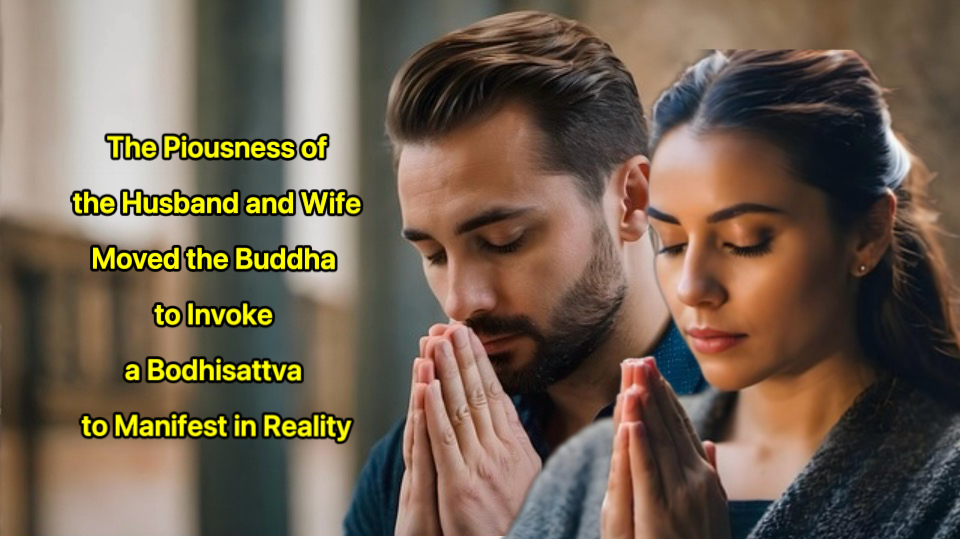
One day, the couples finally summed up their courage and begged H.H. Dorje Chang Buddha III while kneeling on the ground, “Great Buddha Master, are there really Bodhisattvas? Can we ask for seeing Bodhisattvas?”
H.H. Dorje Chang Buddha III said expressionlessly, “When the karmic condition is mature, I will satisfy your wish.”
Time elapsed day by day. Long after that, they figured that H.H. Dorje Chang Buddha III had forgotten what they had asked for long ago and thus dared not mention it again. Furthermore, what if Bodhisattvas did not come even when invited?
Later, they had a chat with several fellow brothers who are rinpoches one day. Only then did they learn that the house that H.H. Dorje Chang Buddha III was living in was badly out of repair. Even the office space was just a small space next to a restroom and narrow stairs. Furthermore, the office desk was actually a very small table! They were greatly astounded after hearing the brothers’ descriptions! What was even more implausible to them was the fact that H.H. Dorje Chang Buddha III worked with His own hands to create artworks, not only to make the living but also help His disciples with their resources of cultivation as well as contribute to disaster relief efforts and benefit people.
The couples were deeply moved. They immediately made a decision to present a stock holding valued at 2.5 million US dollars as an offering to H.H. Dorje Chang Buddha III. However, H.H. Dorje Chang Buddha III said, “I have already said that I will only benefit living beings and will not accept any offerings. Therefore, I will not accept your offering.”
Although they begged very hard and repeatedly, H.H. Dorje Chang Buddha III was not persuaded at all and firmly refused to accept even a penny from that offering. Without any other choice, they could only transfer that stock holding entirely to the World Buddhism Association Headquarters.
H.H. Dorje Chang Buddha III was to determine their karmic conditions. Observing their piousness toward their Master, diligent cultivation and practice, and selflessly benefiting living beings, they truly have established undeniable merit of Bodhi. Therefore, His Holiness the Buddha decided to fulfill the wish they had for many years.
On the magnificent and auspicious day when His Holiness the Buddha was going to transmit the inner-tantric initiation, Laypersons Mr. and Mrs. Deng came to the open-air mandala at the holy site. The sky was completely clear without any cloud on that day. With beautiful green lawn, breeze blowing from time to time, singing and winging of bees and birds in the background, varieties of flowers contesting for beauty, and charming and attractive branches and shoots in the trees, the whole court was covered with splendid colors in addition to jade green.
Sitting on the Vajra dharma throne, H.H. Dorje Chang Buddha III said to the human and non-human disciples in the mandala, “I practice the dharma this time to invite and invoke a Bodhisattva for these two laypersons with their last names being Deng and Wang respectively. I do not have confidence! If it accidentally turns out to be successful, that would be due to the merit of Disciple Deng and Disciple Wang. However, you must absolutely pray and beseech with the most pious heart.”
Shortly after the discourse, H.H. Dorje Chang Buddha III immediately practiced the dharma. In less than 20 minutes, suddenly a beam of golden light flashed in the sky above. Next, countless light rays were emitted. A Vajra Bodhisattva with a height of about 16 feet suddenly appeared. The Bodhisattva was adorned with pearls necklace and looked extremely solemn and majestic, stepping on a lotus flower shape auspicious clouds of rainbow colors. In a few strides, the Bodhisattva descended into the mandala, standing in front of Mr. Deng and Mrs. Wang with a smile.
While they two were still stunned and astounded, the Bodhisattva took out the holy substance to empower them. With a finger snap, a five-colored light ray flew into the mouth of each of them. The taste was utmost delicious without comparison. They both felt relaxed and uninhibited throughout the body. An auspicious state manifested over the entire mandala at the holy site. Only then did the Vajra Bodhisattva merge into the brightness in the sky and disappear.
While everyone was still deeply enjoying the dharma joy and calming lightness occurring just moments ago, Mr. and Mrs. Deng excitedly described the personal feelings and experience that just happened to them, with hand gestures as they spoke. They two were extremely moved and bowed repeatedly to H.H. Dorje Chang Buddha III.
They saw a Bodhisattva! They truly saw a real Bodhisattva descending before them to meet with them! This is not a dream state and much less an illusory image. Though several years have passed, what really made us awaken is: Then, who is the Master who is living right before us and whom we follow closely to learn from? Good heavens! Have you forgotten? He is the supreme teacher of Bodhisattvas and Mahasattvas in the ten directions and even of all Buddhas! He is really the genuine incarnation of the holiest ancient Buddha in the dharma realm – Dorje Chang Buddha!
How fortunate living beings in the current dharma-ending era are to be able to meet this opportunity of H.H.Dorje Chang Buddha III descending to this earthly world. This is the great matter indicating the maturing of good fortune stemming from the karmic conditions since the beginning-less time. I sincerely, wholeheartedly, and eagerly hope that sentient beings in the six realms of the three spheres can all hear the dharma expounded by H.H. Dorje Chang Buddha III, to attain in the current lifetime perfect good fortune and wisdom, freedom from birth and death, holy status of liberation, and realization of great enlightenment!
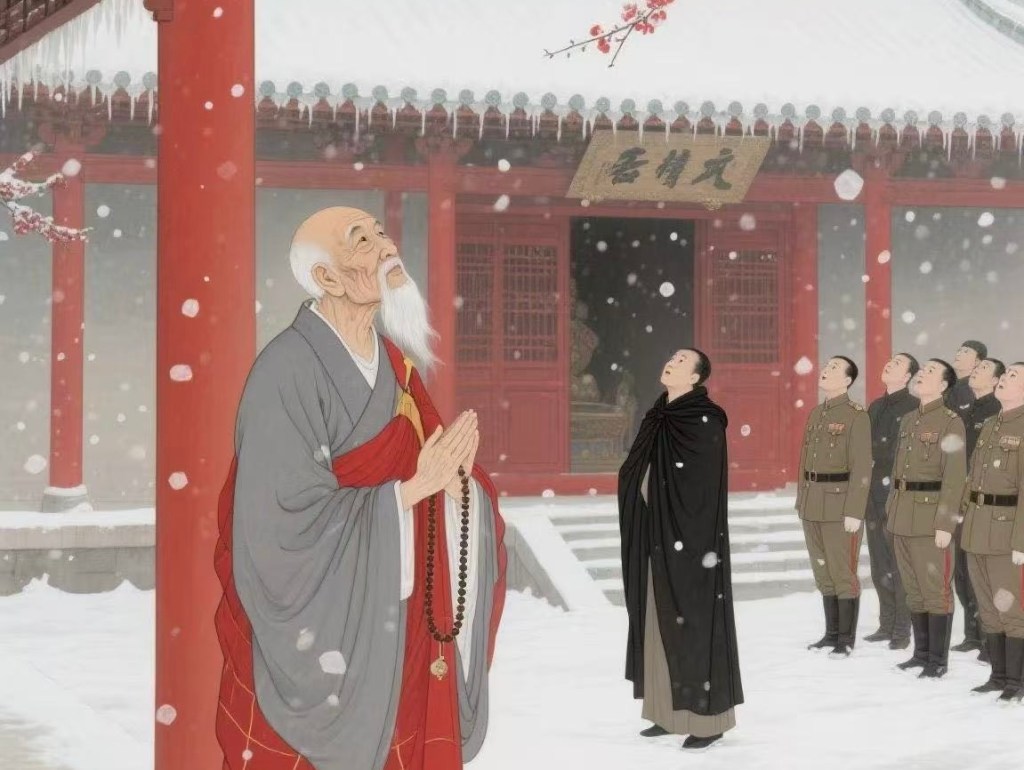
General Li Genyuan was the commander of the Yunnan New Army at that time. He had studied overseas in Germany before returning to China and was a young and energetic general. He regarded himself a strong believer of science and perceived Buddhism as superstition. He wanted very much to have Buddhism removed. Because of that, he came up with the excuse that there were tens of thousands of monks in Mount Jizhu and they might organize armed resistance. Therefore, he personally led his troops to Mount Jizhu. On their way, the several thousands of officers and soldiers were demolishing temples and arresting monks.
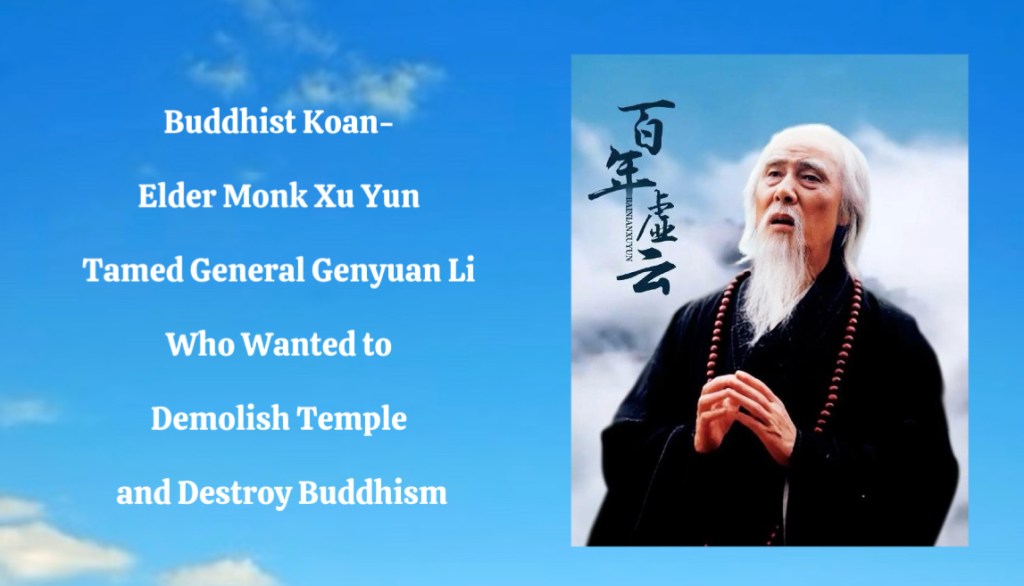
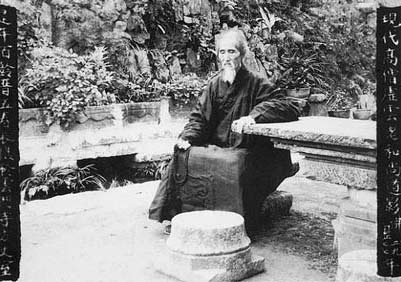
When Elder Monk Xu Yun, abbot of Zhu Sheng Temple in Mount Jizhu, heard about this, he decided to come down from the mountain in person to persuade Li Genyuan to stop. When Li Genyuan saw this thin yet spirited elder monk who had his long beard hanging down, noticing Xu Yun’s uncommon grace and peaceful and calm manner, he was spontaneously startled, “Oh! This is Xu Yun. He does have a little uncommon demeanor!”
Li Genyuan harshly shouted, “I want to catch you. Now you even dare send yourself to me! Maybe you label yourself as not fearing death. Let me ask you, how many lives do you have?”
Xu Yun kept his head up and replied calmly, “Great Commander, I, Xu Yun, have only one life. Also, I am not any hero or brave man who does not fear death. I am just a monastic person. Today, I do not shy away from your killing weapons and risk my death to meet you, Great Commander. My purpose is to beseech an order from you, Great Commander, to save Buddhism. I ask you, Great Commander, to immediately stop demolishing temples and destroying Buddhism.”
“Are you really not afraid of death?” Li Genyuan had a cold smile.
Xu Yun did not have the slightest fear on his face and smiled gently and calmly, “I, Xu Yun, have made up my determination to die for Buddhism long ago. If, before my death, you, Great Commander, can give me an opportunity to state my cause clearly and stop doing damages to Buddhism in the future, I am willing to die.”
Li Genyuan spoke coldly, “You answer me first. You kept saying wanting to die for Buddhism and tell me not to destroy Buddhism. Let me ask you. What benefit does Buddhism have?”
Xu Yun replied with a smile, “The Buddha established Buddhism to advocate great love and great compassion, serve the world and benefit the population, and broadly save living beings from suffering and hardship. Buddhism persuade and transform people in the world to do goodness and remove evil, cultivate conduct and virtue, and save oneself as well as others. Buddhism first teaches people to cure their minds. The mind is the source and origin of all afflictions. Once the origin is correct, all things can be in serenity and peace will be everywhere. The world will be calm and peaceful.”
Li Genyuan’s face turned a little milder, “I admit that you have good eloquence of debate. However, what is the use of these statues sculpted with mud and carved from wood? These statues lead people into superstition for nothing!”
Xu Yun stated calmly, solemnly, and respectfully, “The Buddha spoke about the appearance of Buddha-dharma. The appearance is to express the dharma. Not expressing with appearance, the dharma cannot be publicized. The Buddha statues made of sculptures are to symbolize the Buddha’s solemn elegance and loving compassion, to let people generate homage, confidence, and respectful fear from viewing. Without respectful fear in mind, people will do all kinds of malicious acts, thereby creating calamities and upheavals. Even if we just talk about customs in the world, examples are Confucius’ statue in his temple at Mount Ni, an ancient person named Ding Lan carved wood statues of his parents to repent for not being filial enough earlier, worshipping ancestors in ancestral temples by all clans in China, and bronze statues seen in all Western countries. All are for the purpose of letting people view and generate respect and faith. Buddha statues are sculpted with mud and carved from wood. However, what we respect and pay homage to are not the materials of earth and wood. Rather, we respect and pay homage to the symbolized Buddhas and Bodhisattvas with great love and great compassion. As a result, thoughts of all kinds can develop in the mind to induce us to save ourselves and save others. The enthusiasm of respect and faith arises from seeing Buddha statues. The merit and effect are inconceivable!”
Li Genyuan nodded, “It does sound reasonable, hearing what you said. However, my mind does not submit to that. You monks talk about cause and effect and talk about samsara (transmigration). These superstitious views and concepts are elusive without bases in science. I studied science and military in the West. I despise these old superstitions the most. That is why I am determined to uproot them. I would like to hear how you can skillfully argue about that.”
Xu Yun smiled, “First, I need to explain what superstition is. The so-called superstition refers to blindly following and obeying without clearly understanding the truth and knowing the ultimate reason and, moreover, without distinguishing good or bad and upright from evil. Examples are, killing people to sacrifice for evil deities, slaughtering cattle, sheep, chicken, duck, or other lives to worship ghosts and gods, presenting gold and silver to bribe and beg ghosts and gods for blessing wealth, engaging in sexual misconduct to please demonic ghosts and demonic deities, using ghosts and deities as excuses to raise money with selfish purposes, mocking ghosts and deities to carry out despicably intolerable malicious conduct or direct people to do things violating loyalty, trust, and benevolence, teaching people to steal, rape, and kill, teaching people to commit fraud and extortion, and encouraging cruelty and disorder. All acts of these types belong to superstition! If a faith teaches people with loyalty, filial act, benevolence, and love, advocates faith, trust, and peace, praise and spread etiquette, firmly cultivate humility, promote great love and great compassion of Buddhism, broadly save living beings to leave suffering and hardship to arrive at bliss and peace, teach people in the world to help and support each other with loving compassion, use loving compassion, benevolence, and virtue to teach and transform the world, pursue goodness and break away from malicious deeds, and take refuge in correct teaching and abandon evil dogmas, how can superstition come from such correct faith and correct wisdom?”
Li Genyuan quietly listened and the cruel and offending expression on his face gradually disappeared. He said, “Elder Monk, these statements are truly reasonable! However, you did not explain cause and effect and samsara clearly. These do not agree with science!”
Xu Yun said, “The so-called science is the accumulation and investigation of the wisdom and knowledge of humanity. The approach is inheriting from the past and developing the future, knowing the past to probe the future, and using what is known to investigate and validate the unknown. The learning from such investigation and validation never stops or stays at the same place. People must quest and probe incessantly. Only that is the true spirit of science! The scientific knowledge at the current time is of course greatly advanced from that of the ancient and middle ages. However, does that mean there is nothing unknown already? Does that mean we have completely understood all subtleties and secrets of the universe?”
Li Genyuan said, “Of course we have not been able to do that yet.”
Xu Yun smiled, “Sutras of Buddhism already studied the genuine knowledge exhaustively several thousand years ago. It has been known that the universe never ends through all lifetimes. Matters in existence will annihilate and will be reborn after annihilation, in different shape and state. It is just a process of transforming between different form bodies. On the other hand, only in the current era, Western scientists stated the law of matter’s conservation. Buddhist sutras stated the world’s continuity and living beings’ continuity long ago. These agree completely with the law of physics of the universe. Why do you say the concept of samsara is not scientific?”
Li Genyuan asked, “What do these have to do with samsara and cause and effect?”
Xu Yun said, “The law of cause and effect is the law and principle governing the cycle of the universe! All things must first have the causes of birth and annihilation and then have the consequences. This is the cycle from the law of cause and effect! All sentient beings have wisdom and power of consciousness. After the death of the physical body, the power of consciousness still exists, which is the soul that worldly people talk about. A person who cultivates, practices, and carries out good conduct has a concentrated mind and calmed spirit and knows to go toward goodness and avoid calamity by instinct. Focusing the mind to chant Amitabha Buddha’s name will let one to know about going to the World of Ultimate Bliss. If this person practices good conduct, Buddhas and Bodhisattvas will naturally come to receive him. Conversely, if a person has done a lot of malicious acts and evil deeds and has a surly, hostile, and unkind mind nature, then his conscience is closed and his wisdom is also all lost. That means his power of consciousness and soul also got lost. Moreover, because he does not know chanting the Buddha’s name, he will naturally devolve. With a muddled head and not knowing the direction, he can only follow his karmas to transmigrate and cannot get out. Consequently, he has to suffer life after life and also has to pay back for his earlier malicious acts. This is the law and principle of the universe. Things all have coming and going and undergo the never-ending cycle. What is unscientific in the law of cause and effect and samsara?”
Hearing this, Li Genyuan was horrified. He was sweating all over but felt chilling to the bone. He was extremely moved and said sincerely, “Elder Master Xu, hearing this speech from you is more beneficial than studying in school for ten years to me, your disciple! I, your disciple, studied overseas in the West and only learned some skin-deep and hair-thin science. I really do not know the profound principles of the universe and even absurdly wanted to destroy Buddhism! From listening to your teaching and discourse, I am now completely clear. I ask you, Elder Master Xu, to allow me to take refuge before you to become a Buddhist disciple!”
Xu Yun smiled, “Great Commander, please get up. Since you, Great Commander, have become clear and have the determination to believe in Buddhism, this shows you, Great Commander, still has a very deep root of goodness and can realize the truth quickly. However, please first develop more opportunities to get close to Buddha-dharma and let real faith develop in your mind and become firm and unmovable, the matter of taking refuge can be talked about after that.”
Li Genyuan immediately said, “Elder Master Xu, please do not call me, your disciple, great commander anymore. Even though you, Elder Master Xu, do not want to accept me as your disciple today, I, your disciple, have already submitted to you in my mind. Please call me by name directly.”
In that evening, Li Genyuan gave the order to light up candles to talk with Xu Yun at night about the principles of Buddhism. From the clear manifestation of the law of cause and effect to the inter-webbed net of karmas, consequences of karmas and karmic conditions, the continuity of the world, the continuity of living beings, and other fundamental principles of Buddhism, and to the profound axioms in Buddhist sutras, Xu Yun introduced the profundity of the universe. Li Genyuan was completely convinced and had full admiration. They spoke until after midnight and were very high-spirited.
Li Genyuan sighed, “Without hearing Elder Master Xu’s earnest teaching and explanation today, I really do not know the fact that the principles of Buddhism and Buddha-dharma are so broad, great, and profound. I now have the complete faith and submission! I am determined to take refuge in Buddha-dharma.”
The next morning, Li Genyuan personally guarded Xu Yun to return to the temple. Wearing his military uniform indicating a general’s rank, Li Genyuan led the horse in person. Xu Yun, who was 72 years old, was sitting on the horse. They slowly walked to the temple’s gate. Behind them were several dozens of horse-riding guarding officers. With the shining Sun, golden light appeared from the mountain. Starting from the mountain top and coming downward, trees and grasses were covered with golden color. The scene of the entire mountain shining golden light was extremely splendid and solemn.
Buddhist Koan- Elder Monk Xu Yun Tamed General Genyuan Li Who Wanted to Demolish Temple and Destroy Buddhism